Associate Dean Joseph Cooper | 1937 - 2026 |
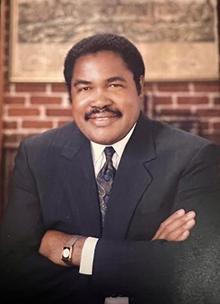
Tribute to NWCU’s First Associate Dean Joseph Cooper
Joseph “Joe” Cooper was born on December 21, 1937, in Williamsburg County, South Carolina, and grew up on a farm where his father was a sharecropper. He died at age 88 in Sacramento, California following a long illness. His funeral service was held on Saturday, February 7, 2026, at the Greater St. Mark AME Church in Hemingway, South Carolina.
At age 17, Joe moved to New Haven, Connecticut where he finished high school in night courses, having completed through the tenth grade of high school in South Carolina. Following high school graduation, he was inducted into the United States Army where he served honorably on active duty for two years. After release from active duty, with all of his belongings in a duffle bag, he travelled in an old Volkswagen to Sacramento; completed college courses; became a real estate broker in 1965; operated his own real estate company, Cooper Realty; and eventually enrolled in and graduated from McGeorge School of Law.
He quickly established himself as a premier trial lawyer, handling high-stakes capital murder defense and complex personal injury litigation. In 1975, he ran as a write-in candidate for the position of Mayor of Sacramento. Though he did not secure enough votes to prevail in the election, he made considerable gains in momentum and public trust for causes he championed. By then, he had served as president of the Sacramento Urban League; President and organizer of the Oak Park Project Area Committee; Chairman of the Sacramento Citizens Committee on Police Practices; Member of the Sacramento City Planning Commission; Director of the Sacramento Commerce and Trade Organization; and member of the Capital City Trial Lawyers Association.
Joe was one of NWCU’s first professors of law after the school was founded in 1982, and for many years was the school’s Associate Dean. He also served for years on the school’s Board of Directors.
At study sessions held for local NWCU law students from the Sacramento area during the early years of the school’s existence, he would occasionally talk about discrimination that he had been subjected to in the American South when growing up in South Carolina. For instance, in one of the sessions when asked about discrimination, he spoke about how he and his siblings walked a long distance to school every school day even though a white man who lived on rural property immediately adjacent to theirs was the driver of the school bus that left his property every morning to pick up white children to take them to schools in the same school district. South Carolina’s schools were segregated by race then. School districts bought and used buses for white children to go to schools but they were not allowed for use to take African American students to school.
His sharing of experiences as a survivor of a marginalized segment of a community served as lessons for NWCU law students on how a person learns to face obstacles and in the process gains a passion for pursuing justice. The experiences he had growing up in the segregated South became a compass that pointed him to a future of helping others fight unfairness and discrimination.
Joe had a wonderfully kind and gentle nature, a straight-talking style, and tremendous wisdom that was appreciated and highly valued by everyone who received his counsel. --- He was first-rate in every aspect, but always humble, down-to-earth, and non-assuming. He was at ease and fully engaged whether speaking with a well-known and highly powerful legislator at the State Capitol building in Sacramento, or a group of concerned people at a civil rights rally, or a client in need of a strong advocate, or a new student beginning the study of law.
Most significantly, he was the epitome of all the brave lawyers who represent individuals without concern about public opinion. He followed the doctrine of fundamental fairness that affirms that to maintain the integrity of our legal system every individual must have access to legal representation and a fair trial.
We remember Associate Dean Joseph Cooper with deep gratitude.